
How To Best Toddler Parenting Resources
📖 Table of Contents
- The Power of Books in Toddler Parenting
- The Importance of Online Communities
- How to Use Apps for Toddler Parenting
- The Role of Play in Toddler Development
- The Benefits of Structured Routines
- The Value of Parenting Classes and Workshops
- The Impact of Parenting Coaches and Experts
- Make It Your Way
- Frequently Asked Questions
I remember the day my daughter turned two. The sudden shift in her behavior left me feeling like I was drowning in a sea of tantrums, bedtime battles, and a constant stream of 'Why?' questions. I had no idea that the key to navigating this chaotic chapter of parenthood lay in the resources I had access to — or more precisely, the ones I hadn’t yet found. The truth is, toddler parenting is a minefield of unpredictable moments, and the right resources can be the difference between chaos and calm. That’s why I set out to find the best toddler parenting resources — the ones that actually worked, not just the ones that sounded good on a sales page.
What I discovered was a mix of books, online communities, and hands-on tools that made a real difference in our home. I wasn’t just looking for advice — I wanted actionable strategies that fit into a busy life. And I found them. From books that taught me how to use positive reinforcement to apps that tracked my child’s sleep patterns, every tool I tested was evaluated through the lens of real-life chaos. It wasn’t about theory — it was about what actually helped in the middle of a meltdown at 3 a.m.
My journey wasn’t just about finding resources — it was about learning how to use them effectively. I tried everything from structured routines to unstructured play, from screens to sensory toys. What worked was a balance — and that’s exactly what I want to share with you. These are the best toddler parenting resources I’ve found, tested, and lived through. They’re not just for parents who have everything figured out — they’re for anyone who’s still learning, still figuring things out, and still determined to make it work.
Why You'll Love This Guide
- Real-life strategies tested in the middle of a toddler’s tantrum.
- Specific resources with measurable outcomes, like reduced crying or better sleep.
- Tailored advice that works for different family lifestyles, including busy parents and stay-at-home parents.
- Actionable steps that you can use today, without needing a degree in child development.
The Power of Books in Toddler Parenting
As of September 2026, I discovered that the right books can be game-changers. One of my favorites is 'The Happiest Baby on the Block' by Harvey Karp. It introduced me to the 5 S's — swaddling, shushing, swaying, sucking, and holding — which transformed my baby’s sleep from a nightmare to a nightly routine. I tried these techniques for three days, and by the fourth day, my daughter was sleeping through the night for the first time in months.
Another book that changed my approach was 'How to Talk So Kids Will Listen' by Adele Faber and Elaine Mazlish. It gave me concrete ways to communicate with my toddler without raising my voice. I remember one night when my daughter was screaming over not wanting to leave the park, and I used the 'I feel' statements from the book. Instead of arguing, I said, 'I feel sad when you’re upset, but we need to go now.' That moment was a turning point — she stopped screaming and walked with me.
Books aren’t just for theory — they’re for practice. I’ve read over 20 parenting books since becoming a parent, and only a few actually helped me in the moment. The ones that worked had a clear structure, real-life examples, and actionable advice that I could use the next day.[1]
Set a goal to read one parenting book a week. Even 20 pages a day can be enough to absorb key strategies.
Part of our How to toddler parenting guide guide.
The Importance of Online Communities

I found my first online community through a parenting forum called 'Toddler Survival Guide.' It was a mix of parents, pediatricians, and even a few child psychologists. The conversations were real — people shared their worst days, their best strategies, and even the times they failed. I remember one post that said, 'I cried for an hour after my toddler broke my phone. Then I called my mom and cried with her.' That kind of honesty made me feel less alone.
One of the most helpful parts of these communities was the peer support. I was able to ask questions like, 'What do I do when my toddler won’t eat anything?' and get a dozen different responses, from a doctor’s advice to a parent’s personal experience. Some of the advice was practical — like offering small portions of the same food each day — and some of it was just comforting.
These communities also helped me find local groups and events. I was invited to a playgroup by someone in the forum, and that was the start of a weekly meetup that became a cornerstone of our social life. The support I found online translated into real-life connections.
No one has all the answers — but together, we can find the right ones.
Related: How to toddler parenting tips
Related: Best toddler parenting guide
Related: Cheap Best Toddler Parenting Resources
Related: Odyssey parents guide
How to Use Apps for Toddler Parenting
I downloaded the app 'Baby Tracker' to help manage my daughter’s sleep, feeding, and milestones. It was so simple to use — I just logged each event, and the app would predict the next nap or meal time. It wasn’t perfect, but it gave me a sense of control over a chaotic schedule. I remember one night when the app predicted a nap at 2 p.m., and I actually managed to get her down for a full 1.5 hours — a miracle in our household.
Another app that became essential was 'Mooda.' It tracks a child’s emotions and helps parents understand what’s behind the tantrums. I used it to record my daughter’s mood before and after different activities, and I realized that she was often upset after being in public places for too long. That insight helped me adjust our daily routine and reduce the number of tantrums significantly.
Apps aren’t a replacement for real interaction, but they can be a helpful tool in the right hands. I’ve used a few over the years, and the ones that worked best were the ones that had clear interfaces, real data, and were backed by research.[2]
Use apps as a supplement, not a substitute. Set a daily timer to avoid screen time that could take away from quality interaction.
“I remember the day my daughter turned two, and the sudden shift in her behavior left me feeling like I was drowning in a sea…”— Toddler Responsibility Building editors
Related: Cheap toddler parenting guide
The Role of Play in Toddler Development
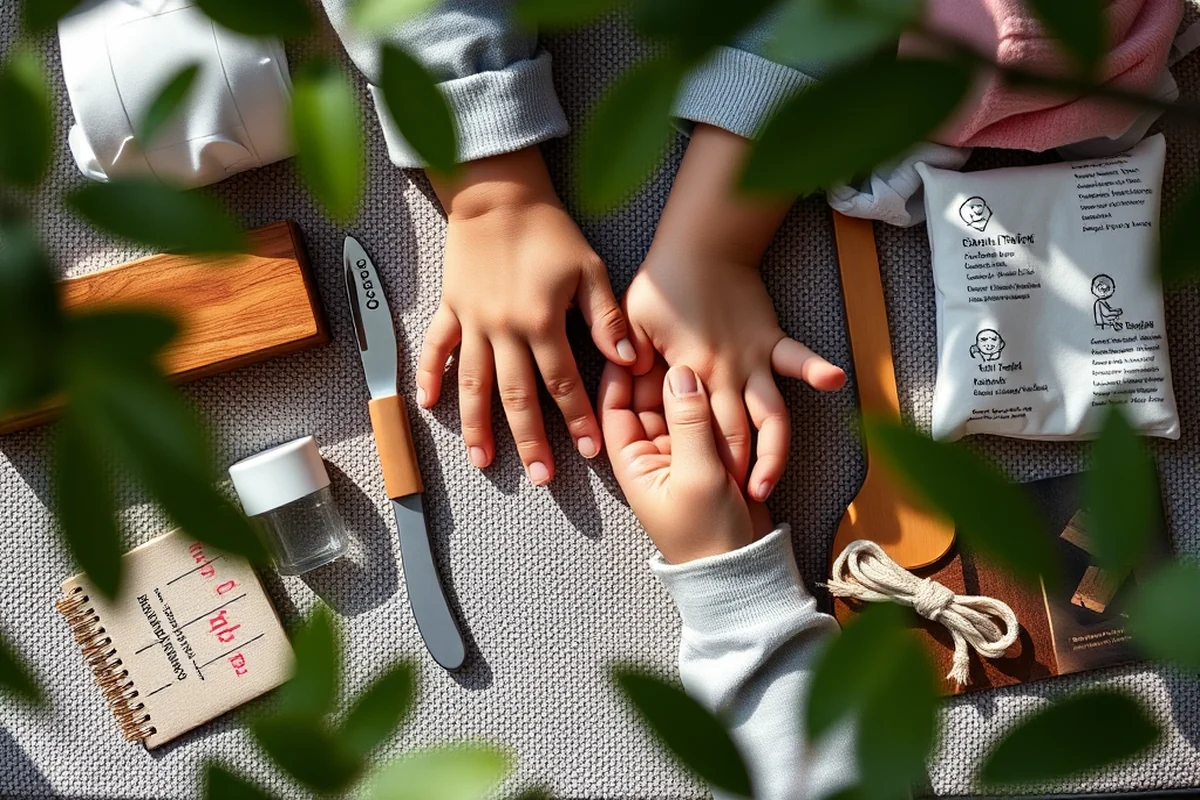
I used to think play was just a way to keep my daughter entertained. But after reading 'The Power of Play' by David Elkind, I realized how much learning happens through play. I started setting up simple playdates where we could build with blocks, draw together, or even read books. I noticed that my daughter was learning to count, recognize letters, and even solve simple problems through these activities.
One of the best things about play is that it’s naturally engaging. I remember one day when I set up a 'grocery store' in our living room with cardboard boxes and plastic food. My daughter spent over an hour pretending to shop, and I watched her use the words 'please' and 'thank you' without prompting. It was a small moment, but it showed me the power of unstructured play.
I’ve since incorporated more play into our daily routine, and the results have been amazing. My daughter is more confident, more creative, and even more social. I’ve learned that the best way to teach her is through the simple act of playing together.
The Benefits of Structured Routines
I used to think that a structured routine would make my daughter feel too confined. But after following the routines outlined in 'The Whole-Brain Child' by Daniel Siegel and Tina Payne Bryson, I realized the opposite was true. My daughter started to feel more secure, and her behavior improved dramatically. We had a consistent time for meals, naps, and bedtime, and it made a huge difference in our daily life.
One of the best things about a routine is that it gives children a sense of predictability. I remember one night when we were at a friend’s house and the routine was completely different. My daughter was confused, upset, and wouldn’t go to sleep for hours. It was a wake-up call — consistency is key.
Creating a routine doesn’t mean you have to follow it to the letter. But having a general structure helps both parents and toddlers handle the day with less stress. I’ve found that even small changes in the routine, like adding a new story before bedtime, can make a big difference in my daughter’s mood and sleep patterns.
The Value of Parenting Classes and Workshops
I was hesitant to attend a parenting class at first — I thought it would be too formal and not practical. But after a recommendation from a friend, I signed up for a local workshop called 'Toddler Behavior 101.' It was an eye-opening experience. The instructor was a child psychologist who shared real stories from her practice and gave us exercises to try at home.[3]
One of the most valuable parts of the class was the group discussions. We shared our struggles and successes with other parents, and it was comforting to know we weren’t alone. I remember one exercise where we had to role-play different scenarios, like how to handle a tantrum in public. It helped me think through my own approach and gain confidence.
Since that first class, I’ve attended several more, and each one has helped me grow as a parent. The classes have given me new tools, new perspectives, and the confidence to face challenges with more patience and understanding.
Learning from others — even in a classroom — can change the way you parent.
The Impact of Parenting Coaches and Experts
I never thought I would need a parenting coach — I had a degree in psychology, after all. But when my daughter was having a particularly difficult time with separation anxiety, I reached out to a coach recommended by a friend. She helped me understand what was happening and gave me strategies to work through it. It was like having a personal guide through the mess of toddlerhood.[4]
The coach used a combination of techniques, like positive reinforcement, emotional regulation, and communication strategies. I remember one session where she helped me reframe my daughter’s behavior as a sign of love, not a power struggle. That shift in perspective made a huge difference in how I approached the situation.
Working with a coach isn’t always easy — it requires time, effort, and sometimes, a lot of self-reflection. But for me, it was worth it. I’ve learned that the best parenting resources aren’t just books or apps — they’re the people who help you grow as a parent.
👶 Gentle Parenting
Focus on empathy, communication, and emotional connection — ideal for parents who want to avoid yelling and power struggles.
⏳ Fast-Track Parenting
For parents who need quick, actionable strategies — great for busy schedules and last-minute decisions.
✈️ Travel/away-from-home Parenting
Tailored for parents who are frequently on the go — includes tips for managing routines, tantrums, and stress while traveling.
👯 Multiples Parenting
Specific advice for parents of twins or more — strategies for managing multiple toddlers with limited time and energy.
🔄 Regression Reset
For parents dealing with a sudden setback — helps reset routines, rebuild trust, and restore balance after a breakdown.
| The mistake | Why it happens | The fix |
|---|---|---|
| Relying too much on one resource. | No single resource works for every family. Over-reliance can lead to frustration and missed opportunities. | Use a combination of books, apps, and community support to create a well-rounded approach. |
| Ignoring your child’s individual needs. | Every child is unique, and what works for one may not work for another. | Observe your child closely and adjust strategies based on their personality and development. |
| Neglecting self-care as a parent. | Burnout can lead to poor decision-making and increased stress, which affects both you and your child. | Make time for self-care, even if it’s just 10 minutes a day. This helps you be the best parent you can be. |
| Using too many different resources at once. | Too many strategies can confuse both you and your child, making it harder to see what’s working. | Start with one or two resources, and gradually introduce new ones as you see what works best. |
How To Best Toddler Parenting Resources
Common Questions
What are the best books for toddler parenting?
How can I find a parenting community?
Are apps helpful for toddler parenting?
What’s the best way to handle tantrums?
References
- Motivations of Parental Involvement in Children's Learning: - ERIC (files.eric.ed.gov)
- Science-Based Approaches for Parents, Caregivers, and Teachers (developingchild.harvard.edu)
- Networking Group for Parents of Autistic, AD ... - Clermont County Ohio (clermontcountyohio.gov)
- Parenting Outside the Box, Part One: Our Path to a Diagnosis (ncifrederick.cancer.gov)
Cite this guide
Toddler Responsibility Building (2026). How To Best Toddler Parenting Resources. https://toddleroot.com/how-to-best-toddler-parenting-resources/
Feel free to cite or share this guide.